

Vita Exacta: A Shared Framework, New Stories
Vita Exacta is entering a new stage of character development and filmmaking, as the book, simulator, and films continue their shared journey through distinct forms of expression.
Leetori is beginning a new stage of character development and filmmaking through Vita Exacta, drawing on the framework developed through Naturopathic Engineering.
The work on personality is now extending into characters whose ways of perceiving, pursuing, and responding can take shape within films.
The starting point is the character. Stories can develop through what particular people seek, the circumstances they encounter, and the relationships they form. The aim is to create increasingly faithful representations of human behavior, with characters whose actions have an internal coherence that extends beyond the needs of a plot.
Small, independent films can now develop alongside the book and simulator. These three forms share a framework and a continuing direction, while each brings its own possibilities: sustained study, interactive experience, and cinematic storytelling. As they develop, discoveries in one can change what becomes possible in the others.
The immediate focus is developing the characters from which the first films can grow.
For Leetori, this opens a new chapter in how the ongoing work takes shape through images, voices, and stories.
Developed with AI assistance from Mylan’s concepts and editorial direction.

Private Development and Public Media
AI-assisted sessions now allow the Foundations to be developed, mapped, transcribed, and reviewed before any part of the work is prepared for publication.
Recent work on Naturopathic Engineering: Foundations has produced a change in the development process of the company.
The change did not come from one decision or one new technology. Several developments arrived together and began complementing one another: private sessions recorded on camera, real-time interaction with AI, immediate transcription, visual elaboration on whiteboards, later analysis of the transcripts, and new possibilities for producing public audiovisual media.
Together, these developments have created a clearer separation between the work through which ideas are developed and the media through which selected results eventually become public.
The Earlier Role of Activation Media
Earlier development notes described Vita Exacta as a writing-activation interface.
The philosophical work was broad and simultaneous. Many concepts, images, corrections, and intuitions developed together, while writing required them to be entered sequentially. AI could help organize this field into conceptual maps, but an organized map was not yet the spontaneous writing through which the work became fully mine.
Activation videos were intended to bridge that difference. A conceptual structure became a voiceover, the voiceover became a sequence of images and associations, and the resulting video created a visual and perceptual environment from which writing could begin.
This was a real stage in the development of the project. It identified the need for activation, sequence, visual reference, and some form of external pressure through which thought could become expressible.
But it also placed several different responsibilities upon the same video. The video had to assist the development of the writing, document the work, become a public proposition, and potentially create the interaction and feedback needed to continue elaborating.
Feedback Before Publication
The original interest in recording or livestreaming development sessions was partly connected to feedback. Explaining something in the possible presence of other people produces a useful urgency. It reveals where a relation remains unclear, where an established position is difficult to defend, and where a new connection may be emerging.
The difficulty was that this made the developmental value of the session dependent upon an audience or upon later publication.
The new AI-assisted sessions provide that responsive presence privately and immediately. While I speak and work at the whiteboard, the AI can listen, recognize the developing context, and respond with a question, objection, observation, or connection when that intervention may add value.
The purpose is not to turn the session into a continuous conversation. Too much intervention can interrupt the movement of thought, introduce tangents, or transfer the direction of the session away from the person developing it. Too little intervention removes the feedback that made the session useful in the first place.
The developing interface therefore depends upon selectivity. AI works best here as a responsive presence that can occasionally create resistance or orientation without becoming the author of the session.
This changes the role of a future audience. A community may still become important for human interaction, reception, and participation, but the research process no longer needs a public audience in order to receive immediate feedback.
Whiteboards, Transcripts, and Resulting Positions
The whiteboards have also clarified what kind of visual reference the writing actually requires.
They are fast, provisional, and incomplete. They allow several relations to remain visible together without requiring every distinction to have already reached its final notation. Their value is not that they present the finished theory. Their value is that they preserve the conceptual field produced while the theory is moving.
The automatic transcript preserves the other dimension of the session: its sequence. It records the route through which the elaboration unfolded and makes the session available for analysis before the footage has been edited or uploaded anywhere.
The transcript is not treated as an authoritative statement. Speech recognition may be imperfect, and live elaboration naturally contains abandoned branches, errors, repetitions, and provisional claims. After the session, the transcript can be reviewed together with the whiteboard and compared with the established foundations.
A resulting-position note then records what survived that review. It does not rewrite the session into a cleaner performance. It identifies the conclusions that can safely be carried into the next stage of development.
The current movement can therefore be understood as:
1. A private recorded session produces live elaboration and responsive feedback.
2. The whiteboard preserves the simultaneous conceptual field.
3. The transcript preserves the sequential path of the session.
4. Later analysis distinguishes discoveries from tangents and corrections.
5. A resulting-position note carries the surviving conclusions forward.
6. The Foundations integrate those conclusions into exact prose, principles, and formulas.
7. Public blackboards present selected final formulations as visible milestones of the work.
The distinction between the whiteboard and the blackboard has consequently become methodological.
The whiteboard is a surface of development. The blackboard is a surface of formulation.
One allows thought to remain provisional and mobile. The other presents what has become stable enough to state publicly.
Development No Longer Depends on Broadcast
The recorded footage can now remain raw while the conceptual work continues. It can be archived without first becoming a finished video. If a session is later edited and published, that version functions as a broadcast of selected moments rather than as a necessary stage in the development itself.
This reverses an important dependency. The work no longer has to pass through editing, uploading, or publication before its transcript and conceptual results can be studied. Development can proceed at the speed of the session itself, while decisions about publication can be made separately and later.
This separation also makes publication safer. Provisional speech does not have to be mistaken for a settled position, and the urgency that helps produce discoveries does not require every tangent to become part of the public record.
The Public Role of Vita Exacta
This new internal process changes Vita Exacta without making film production the cause or destination of the change.
At the same time that the sessions became a more complete development interface, generative media began making it possible to approach audiovisual production differently. Images and scenes no longer need to function only as illustrations of an existing voiceover. They can suggest environments, characters, relationships, and events to which a story can give continuity.
Because the sessions, transcripts, whiteboards, resulting-position notes, Foundations, and blackboards can now carry the weight of development and precision, Vita Exacta does not need to carry that entire weight inside every public production.
It can remain connected to the deeper work while becoming more accessible. A story or film may transmit an insight through atmosphere, movement, character, conflict, or consequence without reproducing every distinction through which that insight was formally derived.
This is not a separation from exactness. It is a different continuation of it.
The books can carry sustained explanation. The simulator can operationalize selected relations. The blackboards can state exact formulations. Vita Exacta can elevate parts of the same work into public experiences that are approachable without prior study of the complete framework.
In this sense, the meaning of Exact Life remains intact. Exactness does not require every public work to contain the whole derivation. It requires the public sequence to remain grounded in work that has been developed carefully beneath it.
The company is therefore not replacing one medium with another. It is establishing a clearer relation among them.
Private sessions develop the work.
Whiteboards and transcripts preserve its movement.
Resulting-position notes carry its conclusions.
The Foundations and blackboards establish its precise form.
Vita Exacta makes selected parts of that work accessible through public media.
This note was developed with AI assistance from Mylan's original concepts, sessions, conversations, and editorial direction.

A New Development Framework
Like three streams converging to turn one waterwheel, the Foundations, simulator, and multimedia project are beginning to work as one.
During the latest work on Naturopathic Engineering: Foundations, an unexpected milestone emerged. The mathematical structure developed for the book clarified the architecture of the simulator itself.
Until now, the book and the simulator had been progressing as parallel expressions of the same broader research. The book approached the subject through language, conceptual analysis, and progressively developed formulations. The simulator approached it through interaction, real-time values, bodily responses, and the unfolding consequences of configured relations.
The connection between them was present, but not yet precise.
That has now changed.
The formal work developed for the book has made it possible to understand the simulator not as a separate illustration of the ideas, but as an operational system built from the same foundations.
The two projects still move in different directions.
The book begins from words and progressively descends toward the natural processes beneath meaning. It develops through distinctions, relations, and transformations in order to clarify how increasingly complex forms of life and experience can emerge.
The simulator begins from simplified operational values and allows their consequences to unfold through interaction. It does not ask the user to study the full philosophical structure directly. Instead, it presents an experiential interface through which complex internal dynamics can become observable.
This difference is now becoming one of the strengths of the project.
The book can define and refine the underlying framework. The simulator can test how selected relations behave when they are implemented dynamically.
The simulator therefore does not need to reproduce the order of explanation used in the books. It can begin from the most useful operational level and progressively develop outward from there.
This has produced a major shift in development.
Future work on the simulator can now proceed from a coherent transformation architecture rather than through the addition of isolated features. Environmental interaction, internal configuration, bodily response, behavior, and developing experience can be treated as connected stages within the same system.
The simulator is also becoming more clearly defined as an interface of its own.
The books are interfaces for sustained study. They allow ideas to be examined through language, structure, and mathematical formulation.
The simulator is an experiential interface. It allows simplified parameters to unfold into more complex consequences through real-time interaction.
Neither medium replaces the other.
The simulator is not simply a visual explanation of the books, and the books are not merely documentation for the simulator. They are distinct instruments approaching the same research from different directions.
The emerging mathematical framework now provides a common foundation between them.
This does not mean that every philosophical concept will be translated directly into a visible statistic or game mechanic. The purpose of the framework is not to turn complex ideas into labels. It is to define the relations through which more complex dynamics can eventually emerge.
Concepts should enter the simulator only when they correspond to actual behavior within the system.
This distinction gives future development a clearer discipline. New components can be evaluated according to whether they extend the existing architecture, produce traceable consequences, and contribute to a coherent experiential cycle.
The next stage will focus on consolidating the current foundation and developing complete interactions in which environmental conditions, internal dynamics, bodily responses, and behavior influence one another over time.
This represents one of the most important transitions in the project so far.
A problem that first emerged through writing has now provided a new direction for software development. The formal structure of the book is beginning to clarify the operational structure of the simulator, while the simulator offers a way to test and experience relations that the books can only describe.
The written and interactive parts of the project are no longer simply developing beside one another.
They are beginning to develop through one another.
This note was developed with AI assistance from Mylan’s original concepts, conversations, and editorial direction.

Vita Exacta and AI-Assisted Writing Activation
A coherent map is not yet writing. Vita Exacta turns AI-organized thought into an activation space where writing can begin.
Vita Exacta exists because thought and projects need sequence in order to become communicable.
This need becomes even more visible when working with AI.
A broad philosophical project does not develop one idea at a time. Many ideas develop together. Modules, concepts, images, corrections, intuitions, practical decisions, and structural problems begin to move simultaneously. When AI is used as a tool inside this process, it can help organize that simultaneity with extraordinary speed.
This is useful, but it also creates a new problem.
AI can synthesize many conversations into a dense map of ideas. It can gather previous explanations, preserve recurring structures, connect distant points, and present them as a coherent conceptual field. In many cases, the result may be close to what I am trying to say.
But a coherent map is not the same as writing.
The map may contain the structure of the thought, but it does not necessarily contain the creative movement through which the thought becomes mine as wording. It can show me what the work is trying to say, but if I write directly from it, the process can become too logical. I am no longer entering the idea from instinct, pressure, rhythm, or lived activation. I am processing an already verbalized structure.
This is where the writing activation video becomes necessary.
The purpose of the activation video is not to let AI write the work. Its purpose is to transform the AI-organized map into an activation environment. The map is no longer treated as text to copy. It becomes a sequence of conceptual anchors, sentences, images, and associations that can help restore the internal condition from which writing can emerge.
In this sense, the activation video protects the creative process from being replaced by the map.
AI helps organize the field of thought. Vita Exacta gives that field a sequence. The activation video then turns the sequence back into a perceptual and instinctual environment, so that writing can happen again as a human act.
This is why the process matters.
The danger of AI-assisted writing is not only that the text may be artificial. The deeper danger is that the writer may lose the activation needed to write from within the idea. The structure may already be present, but the living movement of the writing may not have happened yet.
Vita Exacta responds to this by separating the stages.
The AI-assisted map organizes simultaneity.
The activation video restores pressure, imagery, rhythm, and direction.
The writing then becomes the normalization of that activation into original wording.
This process allows AI to remain a tool for structure without becoming a substitute for authorship. It also clarifies why Vita Exacta is necessary as a channel: it documents the passage from simultaneous conceptual development into sequential creative expression.
In this way, Vita Exacta is not only a place where finished thoughts are presented. It is a working interface for making thought writable.
This note was developed with AI assistance from Mylan’s original concepts, conversations, and editorial direction.

Health, Normality, and Responsibility
To be healthy is to be able to respond from your own normality.
One of the central questions behind naturopathic engineering is whether health and normality are actually the same thing.
Modern society tends to treat them as if they were interchangeable. Health is often presented as the condition individuals should pursue, while sickness is presented as the condition they should avoid. As a result, people are measured against standards that define what a healthy person is supposed to be.
This creates a simple framework: healthy or sick.
Normality, however, is a different concept.
Normality is not the same as health, nor is it the same as a statistical average. Every individual possesses a unique history, constitution, personality, development, aspirations, strengths, weaknesses, memories, and experiences. For this reason, the question of normality cannot be answered simply by comparing an individual to a population.
Statistics can describe groups. They can reveal patterns, averages, and tendencies. What they cannot do is determine the normality of a particular individual.
The average is an abstraction. Individuals are real.
This distinction becomes important because many health standards emerge from statistical observations. A large population is measured, averages are calculated, and guidelines are created. These guidelines can be useful, but they inevitably describe populations better than they describe particular individuals.
This is not necessarily a mistake.
A government, institution, or healthcare system cannot operate on millions of unique definitions. To coordinate large groups of people, standards are necessary. Standards create order, predictability, and shared direction.
The difficulty is that what is useful for coordinating a society is not necessarily sufficient for understanding an individual.
A society requires organization.
An individual requires self-discovery.
The two needs are related, but they are not identical.
When the needs of society become the only reference point, people can gradually lose sight of their own normality. The question becomes whether they conform to a standard rather than whether they understand themselves.
Naturopathic engineering begins from a different question.
Rather than asking whether an individual conforms to a standard of health, it asks whether that individual is discovering and developing their own normality.
This process cannot be delegated.
No government can discover an individual’s normality.
No institution can discover it.
No statistical model can discover it.
Others may provide information, observations, tools, and perspectives, but the responsibility remains with the individual.
Responsibility is often understood as obligation or liability. Yet respons-ability, more fundamentally, points to the ability to respond.
In the context of normality, responsibility means participating in the process of understanding oneself rather than outsourcing that task entirely to external authorities.
This process is not always comfortable.
Modern discussions about health often assume that suffering is necessarily a sign that something has gone wrong. Certainly, some forms of suffering arise from injury, disease, and dysfunction. Yet suffering is also present in learning, training, creation, discipline, exploration, and personal development.
Growth frequently requires effort, uncertainty, sacrifice, and persistence.
For this reason, suffering should not automatically be equated with pathology.
A person engaged in discovering and developing their own normality may encounter challenges, frustrations, failures, and difficulties. These experiences are not necessarily evidence that the process is wrong. They may simply be part of development itself.
Paradoxically, society itself depends upon individuals who undertake this process.
New products, new services, new discoveries, new philosophies, new forms of art, and new solutions rarely emerge from conformity alone. They emerge from individuals who are willing to question assumptions, explore possibilities, and develop their own understanding.
A healthy society therefore requires both order and individuality.
It requires standards for coordination, but it also requires individuals capable of thinking, creating, and responding beyond those standards.
The objective of naturopathic engineering is not to reject health standards, nor to replace them with another universal standard.
Its objective is to help individuals better understand their own normality and assume responsibility for its development.
The question is not merely whether a person is healthy or sick.
The deeper question is whether a person is actively engaged in discovering, cultivating, and expressing their own nature.
This note was developed with AI assistance from Mylan’s original concepts, conversations, and editorial direction.
☮️ War as Induced Confusion
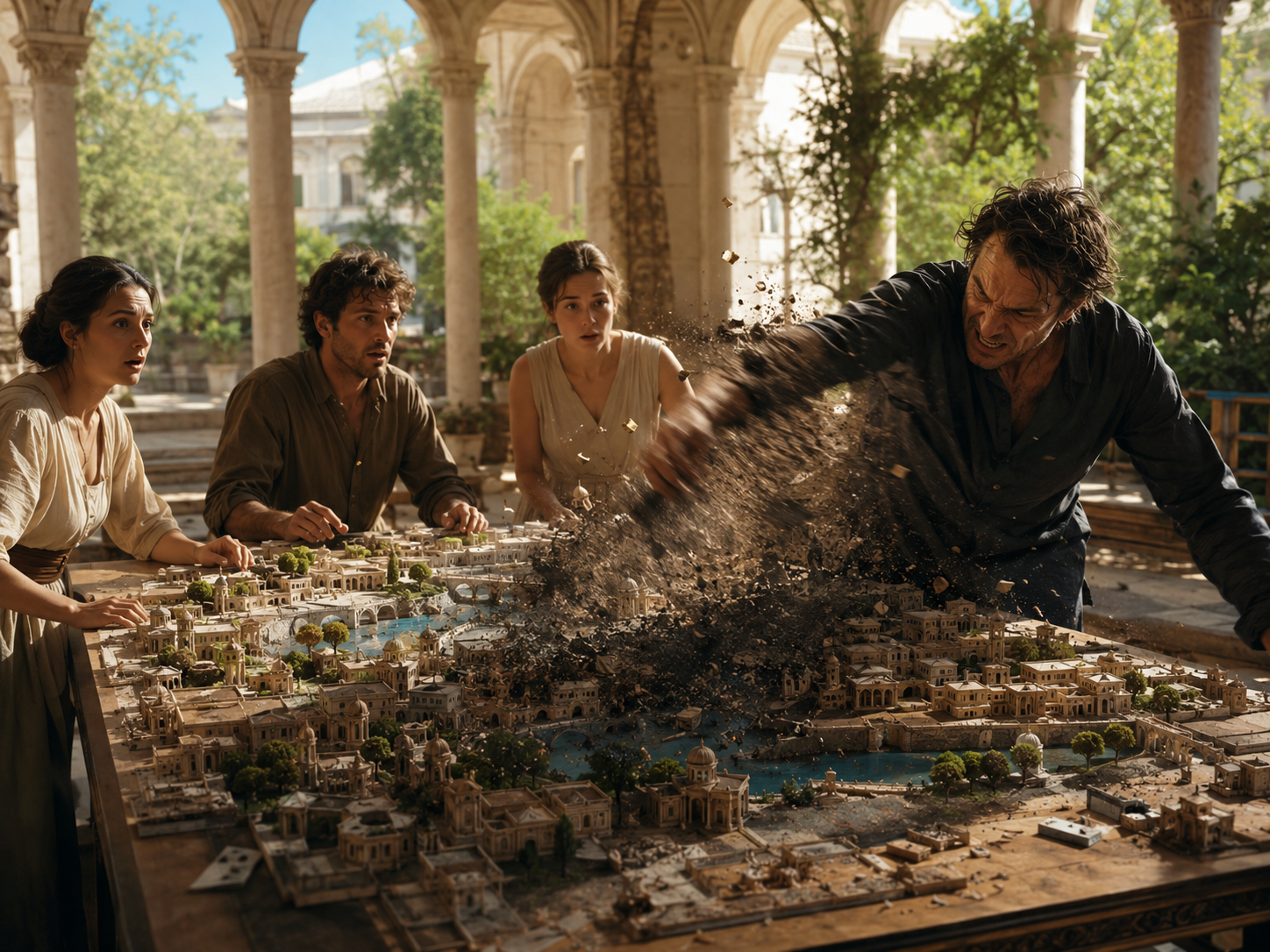
When intelligence can no longer carry the weight of complexity, it turns to confusion.
War can be understood as a failure of communication, but more precisely as the deliberate or reactive production of confusion when communication no longer carries the situation forward.
Etymologically, war can be traced toward conflict, disorder, confusion, and the disturbance of order. In this sense, war is not simply violence. Violence is one of its expressions. War begins earlier, when a party cannot process a situation clearly enough to resolve it, and instead introduces chaos into the shared field.
In this framework, war is a stupid dynamic in the structural sense: not because the people involved have no intelligence at all, but because cognition is no longer leading the process. Instinctual and emotional intelligence may still be active, but they are not being integrated by cognitive intelligence. The person or group does not take the time to elaborate the full picture, understand the dynamics, and communicate through the complexity of the situation. They move instead toward reaction, execution, pressure, and force.
This is why war can be seen as the action of those who cannot carry order forward.
When a party cannot obtain what it wants through understanding, negotiation, or intelligent communication, it may attempt to create confusion for the other party. The goal becomes not to resolve the problem, but to destabilize the field so that the other side must lower itself into the same confused state. War is then an attempt to drag intelligence into chaos.
The party that initiates war is often the party that has already lost the capacity to continue through order. It cannot elaborate the situation, so it tries to destroy the situation. It cannot resolve the problem, so it tries to dissolve the problem into confusion. It cannot communicate at the level required by the complexity of the conflict, so it creates a lower field where instinct, fear, anger, urgency, and force dominate.
In this sense, war is induced confusion.
It is not the continuation of intelligence.
It is the collapse of intelligence into reaction.
It is the destruction of the problem instead of the resolution of the problem.
At the individual level, this can be seen when someone cannot operate through cognition. If a person is mainly reacting through anger, fear, instinct, or emotional pressure, the solution is often not to argue more, because argument requires cognitive processing. The practical approach may be to avoid feeding the anger, reduce the trigger, and prevent the person from entering a more chaotic state.
But society is different. A society contains many mind configurations. Even when political leaders operate through simplified, emotional, or instinctual messages, there are always cognitively intelligent individuals within the broader system who can read the dynamics more clearly. The problem is that political power often rewards popularity, speed, emotional clarity, and instinctual mobilization more than careful elaboration. A simple message spreads faster than a complex understanding. A reactive leader can gather force more easily than a reflective one can explain the full picture.
This is why war can emerge from political stupidity: not necessarily from the absence of all intelligence, but from the dominance of emotional and instinctual mobilization over cognitive elaboration.
The answer to war, then, is not merely peace as passivity.
The answer is clarification.
If war is induced confusion, then the response must be the intelligent reconstruction of the dynamics. The situation must be made visible. The motives, pressures, needs, fears, reductions, and distortions must be brought into order. Confusion must be studied until it becomes intelligible.
Death itself can be understood here as the final confusion: the destruction of the living sequence that could still have developed, communicated, changed, and resolved itself. War brings death because it replaces elaboration with collapse. It ends sequences instead of transforming them intelligently.
So the deeper answer to war is not simply to oppose violence after it appears. It is to understand the dynamics that produce confusion before violence becomes the only remaining language.
War begins when intelligence fails to carry complexity.
Peace begins when cognition restores the possibility of order.
This note was developed with AI assistance from Mylan’s original concepts, conversations, and editorial direction.
☯️⭐ Vita Exacta - Sequentiality and Simultaneity
Life is the continuation of one thread through reality.
Vita Exacta can be understood through a fundamental duality between sequentiality and simultaneity.
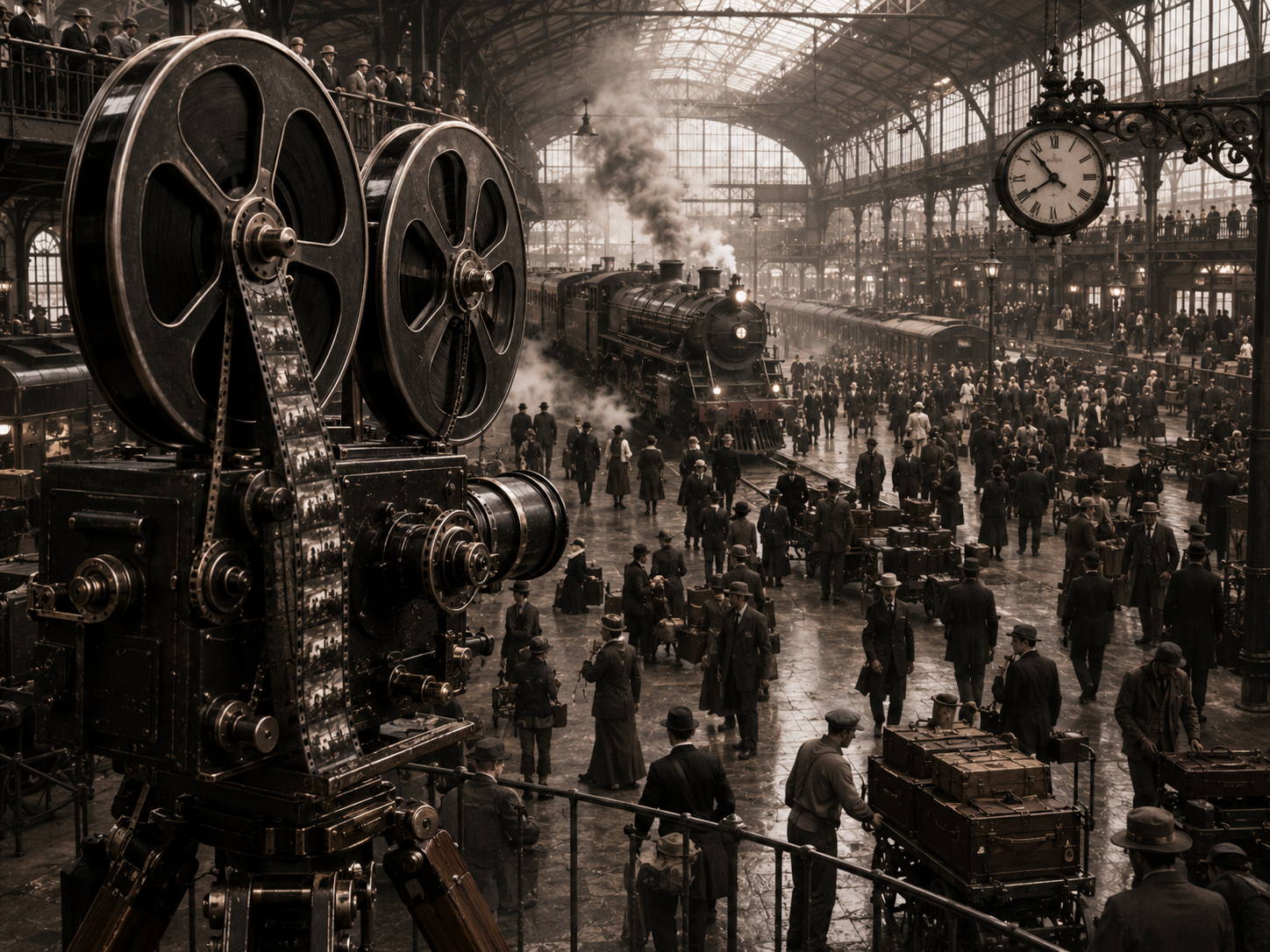
Reality is simultaneous. It is the field in which many processes, relations, impressions, needs, memories, and dynamics happen together. Reality does not unfold for us as a clean sentence. It is already interconnected before we describe it, before we separate it, and before we organize it into an explanation.
But the mind cannot process reality all at once. To understand reality, the mind needs sequence. It needs to begin somewhere, move through steps, distinguish phases, and give order to what is originally simultaneous.
This is where life becomes the interface of sequentiality.
The life of something is the sequence through which it appears, develops, changes, acts, is replaced, and eventually belongs to the past. A living organism has this sequence. A thought has this sequence. A project has this sequence. A system, explanation, conversation, or video also has this sequence.
So if reality names the simultaneity of what exists, life names the sequentiality through which something can be followed, understood, experienced, and remembered.
In this sense:
Reality is simultaneity.
Life is sequentiality.
Vita Exacta is educational because it works at the interface between the two. It gives sequence to what is simultaneous. It does not claim that the sequence contains reality completely. Instead, it understands that sequence is the way the mind enters reality, processes it, and makes it communicable.
The purpose of Vita Exacta is therefore to build better sequences: sequences that are more exact because they remain aware of the simultaneity they are trying to approach.
This is why the channel is not only about explaining life in the conventional sense of living organisms. It is about the deeper meaning of life as the sequence of things and dynamics. And because every explanation, thought, project, and system has a life, Vita Exacta becomes a channel for educating the mind into the nature of sequence itself.
Its deeper educational purpose is to help reasoning move through life without forgetting reality. To move through sequentiality without losing awareness of simultaneity.
This note was developed with AI assistance from Mylan’s original concepts, conversations, and editorial direction.

👌 Craft, Role, Power Drift, and Happiness
Even an eagle cannot fly underwater.
The deeper frustration is that many people are not operating from craft.
A lawyer, at their best, is not merely someone who says what is technically legitimate. A lawyer is the structured voice of a position. They translate a lived conflict into legal form, decide what matters, discard what does not, and build a path forward. They are not the judge. They are not supposed to decide reality in advance. Their role is to make a position usable.
An administrator, at their best, is not a little sovereign of the building. They are not police, priest, parent, or community gatekeeper. They are supposed to administer: receive issues, organize responses, manage common areas, document decisions, coordinate technicians, clarify responsibilities, and keep the building functioning.
When people lose contact with the craft of their role, they drift into power.
The lawyer becomes a miniature judge.
The administrator becomes a miniature mayor.
The resident becomes a miniature police officer.
And then nobody is actually building anything. Nobody is refining the work. Nobody is serving the function. They are defending status, minimizing effort, and protecting their own comfort.
From a craftsman’s perspective, the question is simple:
What is this for?
What is its proper function?
Is it well made?
Is it serving its purpose?
Applied to professional roles, this immediately reveals where people are out of alignment.
This does not mean every lawyer or administrator is malicious. Some are tired, limited, bureaucratic, insecure, or trained to avoid responsibility. But the result is the same: they do not embody the craft.
If someone truly chooses their work, they try to do it well.
This is also one of the keys to happiness.
A person becomes unhappy when their role does not match their configuration. They may still function, earn money, gain status, or become socially recognized, but they are not fed by the work. Instead of deepening the craft, they begin compensating through power, hierarchy, control, judgment, bureaucracy, or social positioning.
People who did not find the role that makes them alive often start using the role they have as a substitute for aliveness.
A lawyer who loves the craft becomes precise, articulate, strategic, protective.
An administrator who loves the craft becomes orderly, responsive, practical, reliable. A builder who loves the craft improves the world through function and beauty.
But when the role is only what was accessible, the person may cling to the title rather than embody the work.
Then the title becomes identity compensation:
I am the lawyer.
I am the administrator.
I am the resident.
I am the one who knows how things work here.
That is where power drift begins.
Most people do not choose from their true nature. They choose from what was reachable, acceptable, inherited, socially rewarded, or economically necessary. Years later, they may find themselves trapped in a role that never truly matched them. So they do not build through the role; they defend themselves through it.
That becomes unhappiness.
The happy person is not simply someone who has an easy job. It is someone whose activity corresponds to their structure. They can suffer, work hard, struggle, and still feel alive because the work is metabolized as purpose.
Happiness comes from finding the craft that corresponds to how one is built.
When people cannot find that craft, they often turn available roles into positions of control rather than expressions of function. They stop building through the role and start using the role to protect themselves from the frustration of not being where they belong.
People who do not want to build reduce everything to legitimacy, procedure, hierarchy, and permission.
People who build care about function, beauty, usefulness, coherence, and responsibility.
That is the real divide: building from function and beauty versus operating from control and minimization.
This note was developed with AI assistance from Mylan’s original concepts, conversations, and editorial direction.

☮️✨ Creative Development by Normalizing Activation
Creativity is not only creation. It is the normalization of activation into form.
Creative development is the process of entering activation and normalizing that activation into expression.
Activation builds:
- simultaneity,
- intuitions,
- impressions,
- symbolic tension,
- emotionality,
- perceptual movement,
- cognitive pressure,
- experiential density.
Expression becomes the normalization of that activation into structured form.
Without activation, there is no movement toward creation.
Without normalization, activation becomes fragmentation, overload, agitation, or paralysis.
Creative development therefore depends on building sustainable activation-normalization loops appropriate to the configuration of the mind.
This framework emerged from documenting my own instinctual writing process while developing the Naturopathic Engineering series, but the process can be generalized because different mind configurations appear to require different activation interfaces.
One side of creativity is activation. The other side is normalization.
Activation creates movement. Normalization gives movement form.
The Creative Duality
This duality appears throughout creativity:
- intuition and structure,
- inspiration and execution,
- simultaneity and sequence,
- pressure and release,
- immersion and articulation,
- perception and wording.
A creator develops by learning how to intentionally enter activation and then normalize that activation constructively.
The resulting form may become:
- words,
- music,
- movement,
- visual art,
- systems,
- games,
- simulations,
- technologies,
- architecture,
- social structures,
- or interfaces.
Activation Begins Through Life
The activation itself usually does not begin while sitting at home trying to create. Activation begins while living.
You move through environments.
You walk through cities.
You encounter people, systems, atmospheres, weather, sounds, textures, tensions, memories, bodily sensations, intuitions, symbolic moments, and emotional reactions.
The intuitions emerge spontaneously while interacting with life itself.
The problem is that these intuitions are highly simultaneous and unstable.
By the time the creator returns home and attempts to externalize them sequentially through wording, much of the activation has already dissipated.
This creates a fundamental difficulty:
the intuitions exist intensely during experience, but weaken when the creator attempts to sit down and structure them consciously.
For this reason, the function of the activation medium is not merely aesthetic or decorative. Its function is anchoring.
The creator associates a medium with the simultaneous field of intuitions experienced throughout life.
The medium becomes a retrieval interface for activation.
Structural Foundation Before Activation
Before activation media is developed, the philosophical structure itself must exist. The workflow therefore begins structurally.
The creator first defines:
- the books,
- the sections,
- the modules,
- and the conceptual architecture of the project.
The structure acts like a skeleton around which activation later organizes itself.
Only after the structural foundation exists can activation become intentionally directed.
Entry Maps as Simultaneous Structure
After the modules are defined, an entry map is created.
Initially, chromatic entry maps were developed because colors and spatial organization allowed many intuitions to coexist visually before wording forced sequentiality.
The colors were not decorative.
The spatial organization was not merely organizational.
They stimulated simultaneity.
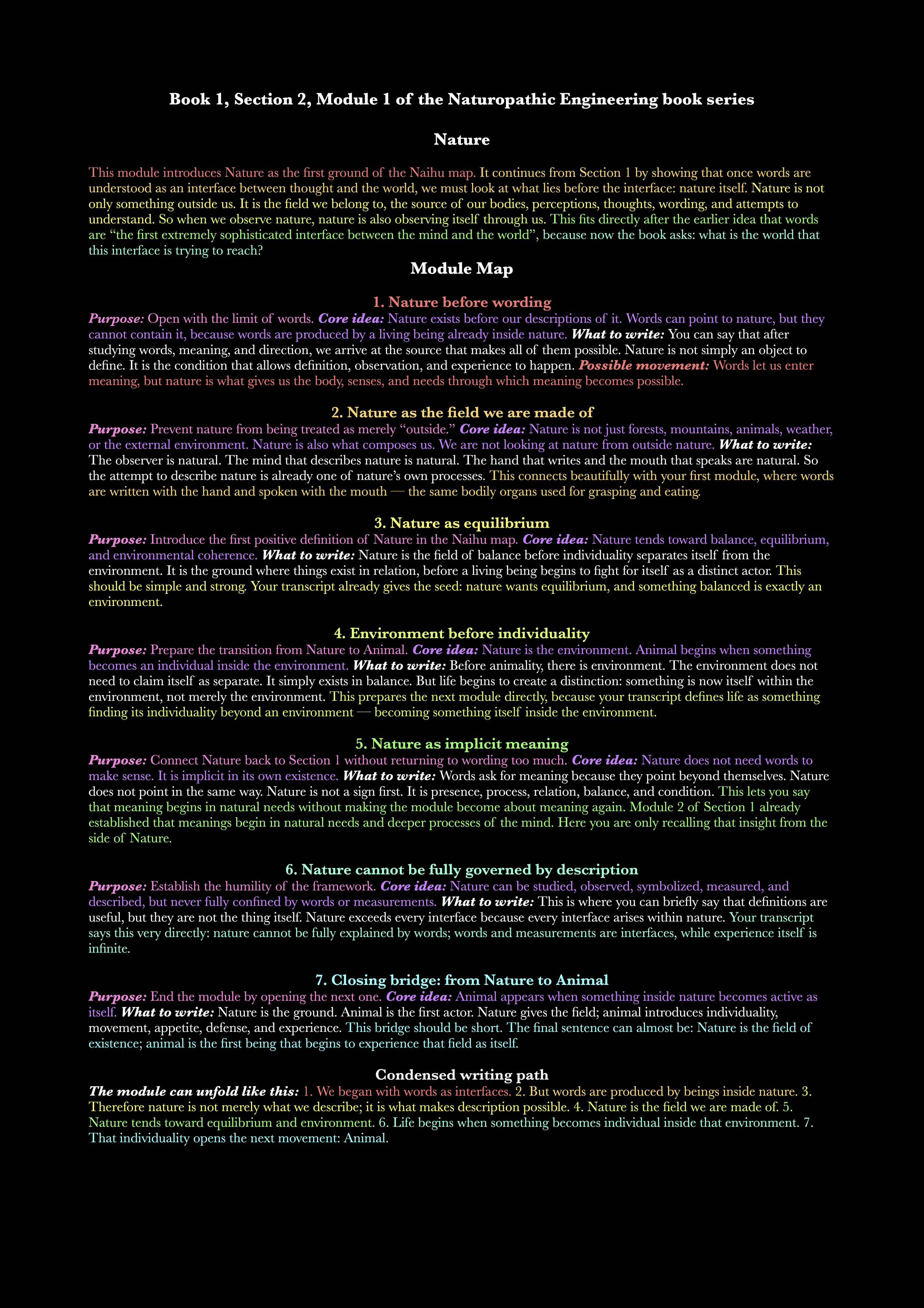
Chromatic map for the Nature module. The colors organize the voiceover into conceptual movements, turning simultaneous insight into a visible sequence for writing, image generation, and video development.
The entry map allowed multiple conceptual movements to remain visible at once before they were transformed into sequential wording.
Later, this process evolved further.
The chromatic entry map became less important as a direct activation system and more important as:
- a simultaneous conceptual overview,
- a structural condensation layer,
- a bridge between module structure and future activation media.
The entry map now acts primarily as:
- a structural interface,
- a simultaneous conceptual map,
- and the basis for voiceover construction.
Voiceover as Sequential Crystallization
After the entry map is established, a voiceover is created from the structure.
The voiceover transforms simultaneous conceptual movement into sequential wording.
This becomes important because:
- reality is fundamentally simultaneous,
- while wording unfolds sequentially.
The voiceover therefore becomes:
- the sequential spine of the module,
- the verbal crystallization of simultaneity,
- and the structural foundation for activation media.
Different Mind Configurations Require Different Activation Interfaces
Different minds enter activation differently.
Some people enter activation through:
- images,
- music,
- movement,
- systems,
- environments,
- emotional immersion,
- social interaction,
- bodily tension,
- simultaneity,
- intellectual compression,
- symbolic resonance.
Creativity is therefore configuration-dependent.
Different minds accumulate and normalize activation differently.
Instinctual Activation
The discoveries that led to this framework emerged primarily through instinctual writing. Instinctual cognition appears highly sensitive to:
- immediacy,
- embodiment,
- simultaneity,
- environmental stimulation,
- symbolic compression,
- intuitive impact,
- movement,
- perceptual density,
- autobiographical resonance.
The instinctual mind often does not naturally remain inside prolonged emotional continuity or purely abstract sequential reasoning.
It requires an explosive entrance into simultaneity.
For this reason, activation interfaces become extremely important. The instinctual writer may require:
- symbolic sequences,
- movement,
- perceptual immersion,
- atmospheres,
- textures,
- visual density,
- emotional tension,
- environmental resonance,
- symbolic unpredictability.
The purpose is not merely to generate ideas.
The purpose is to construct sufficient activation pressure for spontaneous wording to emerge.
Why Spontaneity Matters
The writing must remain spontaneous because the reader is not only receiving information. The reader is experiencing the movement of thought itself.
If activation is weak, wording becomes mechanically explanatory.
The concepts may still exist intellectually, but the writing loses:
- rhythm,
- pressure,
- continuity,
- symbolic movement,
- experiential flow.
But when wording emerges spontaneously from activation, the writing preserves traces of the simultaneous experience from which it emerged.
The reader then experiences:
- movement,
- continuity,
- perceptual flow,
- symbolic density,
- emotional rhythm,
- living cognitive motion.
This realization became extremely important.
The activation process was not merely helping the writer “have ideas.”
It was preserving the living flow of thought so that the reader could experience the movement of the writing itself.
Activation Media
At first, the activation process developed through chromatic text and entry maps. The colors and spatial organization helped restore simultaneity before writing. But the process eventually evolved beyond static text.
The activation system now requires media.
Activation media can include:
- generated images,
- found images,
- videos,
- personal footage,
- symbolic fragments,
- environmental material,
- textures,
- diagrams,
- music,
- movement,
- or any medium capable of carrying resonance.
The specific source of the media is secondary.
What matters is whether the media activates the right internal state.
The media is not chosen only to illustrate the voiceover literally. It is chosen to create symbolic, perceptual, emotional, instinctual, and memory-based activation around the structure.
This means activation media functions as:
- a retrieval interface,
- a symbolic environment,
- a perceptual bridge,
- a memory structure,
- and a way to reconnect sequential wording to simultaneous experience.
For instinctual writing, visual and moving media are especially important because they can create an immediate explosion of impressions. Images and videos can compress many intuitions into a single perceptual moment.
For emotional writing, music may often function better because it creates continuity, atmosphere, rhythm, and prolonged immersion.
So the medium changes according to the configuration of the mind.
The important point is not whether the material is generated, recorded, found, or collected.
The important point is that the activation media helps the writer enter the state from which spontaneous wording can emerge.
Module-Specific Activation Archives
Different philosophical states require different perceptual environments. This means the activation archive itself becomes part of the interface.
Separate activation reservoirs may emerge for:
- Nature,
- Dualities,
- Systems,
- Mind Configurations,
- Reactions and Normalizations,
- Propositions,
- Emotionality,
- Instinctuality,
- Society,
- Environments.
For example, the Nature module does not simply require beautiful landscapes.
It requires perceptual material related to:
- equilibrium,
- cycles,
- emergence,
- roots,
- fungi,
- weather,
- water,
- environmental relation,
- decay,
- growth,
- systems before individuality,
- and the nature of things themselves.
The activation process therefore becomes:
- entering the philosophical state of the module,
- gathering resonant media fragments,
- sequencing them around the voiceover,
- and allowing symbolic associations to emerge afterward instead of forcing literal illustration beforehand.
Emotional Activation
An emotional writer may enter activation differently.
The emotional mind may already sustain strong internal continuity of imagery and emotional immersion.
For this reason, emotional writers may require less explosive perceptual simultaneity and more prolonged continuity.
Music may therefore become the activation interface.
Music creates:
- immersion,
- continuity,
- atmosphere,
- rhythm,
- emotional flow,
- prolonged emotional movement.
The emotional writer may move through life accumulating:
- atmospheres,
- emotional impressions,
- lived experiences,
- memories,
- emotional states.
The music then becomes associated with those experiences.
Later, when the same music is played again, the emotional continuity is reactivated. The emotional writer re-enters the emotional field connected to those lived experiences.
Music therefore becomes:
- an emotional retrieval mechanism,
- a continuity anchor,
- an immersion interface,
- and a memory activator.
This creates an important distinction:
- instinctual activation tends toward explosive simultaneity,
- emotional activation tends toward immersive continuity.
Images and perceptual fragments often activate instantly. Music generally activates progressively.
Activation as the Real Work
This process initially appeared inefficient because the actual writing itself could happen very quickly once activation was reached.
But eventually it became clear that, for instinctual creativity, activation itself is part of the work.
The creator may spend hours, days, or weeks accumulating:
- impressions,
- symbolic associations,
- environmental resonance,
- perceptual continuity,
- emotional tension,
- intuitive movement,
- and simultaneous density.
Then the writing itself may normalize all of that in only a short period of spontaneous crystallization.
The writing therefore becomes the release phase of accumulated activation.
The preparation is not separate from the work.
The preparation constructs the conditions necessary for spontaneous wording to emerge.
The Complete Workflow
The workflow can be understood as:
1. Define the books.
2. Define the sections.
3. Define the modules.
4. Build the entry map.
5. Create the voiceover from the entry map.
6. Find or create activation media for the voiceover.
7. Sequence the activation media over the voiceover.
8. Use the activation video to enter writer mode.
9. Normalize activation into spontaneous wording.
Creativity as Interface Construction
Creativity is not merely invention.
Creativity is often the normalization of activation into structured form. Words are only one interface among many.
Images, videos, music, systems, games, environments, simulations, and symbolic structures can all become interfaces between the mind and the world.
The activation workflow itself becomes an interface:
- between simultaneity and sequence,
- between life and wording,
- between perception and structure,
- between activation and normalization.
This reflects the same foundational insight that generated the philosophy itself: reality is fundamentally simultaneous, while wording is sequential.
The activation process exists to reconnect sequential writing to the simultaneous experiential field from which meaningful thought originally emerges.
This note was developed with AI assistance from Mylan’s original concepts, conversations, and editorial direction.

☮️ Authorship, Authority, and the Three Territories of Intelligence
Each form of intelligence creates its own territory: frameworks of thought, networks of relation, and forceworks of action.
Authority can be understood through the idea of authorship: to have authority is not merely to dominate, but to stand as the originating source of a world, a structure, an action, or a relationship. In this sense, each form of intelligence produces its own territory of authorship.
Cognitive intelligence seeks authorship through creation.
It wants to play, build, design, understand, invent, write, compose, structure, and create worlds. Its authority comes from originating something. The cognitive person becomes an author by making a system, a work, a philosophy, a game, a company, a technology, or a private world of meaning. Because the world is created from within their own cognition, their authority is natural: they understand the structure because they generated it. This form of authority is generally safe, because it is self-contained and creative. It does not require control over others unless others become envious of the independence it creates.
Instinctual intelligence seeks authority through authorization.
It is more oriented toward execution, immediacy, action, procedure, force, and concrete response. When instinctual intelligence is not strongly cognitive, it may not create its own world of authorship, because it does not primarily enjoy elaborating ideas, meanings, or systems. Instead, it often becomes powerful through structures that authorize action: government, institutions, military, police, bureaucracy, hierarchy, and operational roles. Here, authority is not generated from creation but granted by a larger power. The person becomes an author of action because they have been authorized to act.
Emotional intelligence seeks authorship through relational networks.
It creates territory through reputation, stories, social bonds, emotional memory, trust, gossip, alliances, inclusion, exclusion, and shared interpretation. Emotional authority comes from influencing how people feel about each other and how new people are introduced into an existing network. In this sense, the emotional person can become the author of a social atmosphere. They do not necessarily control things by force or by creation, but by maintaining narrative influence inside the relational field.
This also explains why manipulative people often rely heavily on emotional authorship. They build networks of stories around people, and through those stories they maintain authority over the emotional interpretation of the group. When someone is private, independent, and cognitively self- authored, they become difficult to “write” into that network. Their life is not easily accessible to gossip, reputation control, or emotional possession.
This can make emotionally manipulative people angry, because the private creator escapes their authorship. They cannot easily define him, smear him, recruit him, or place him inside their relational narrative. His authority comes from what he builds, not from their permission, their rank, or their story about him.
So the three intelligences generate three different territories of authority:
Cognitive intelligence authors worlds.
Instinctual intelligence executes authorized action.
Emotional intelligence authors relational reality.
The conflict begins when one form of authority tries to dominate another: when authorized force tries to suppress creation, when emotional narrative tries to possess a private author, or when cognitive authorship refuses to submit to networks that survive by defining people socially rather than understanding what they are building.
Cognitive intelligence builds frameworks.
Emotional intelligence builds networks.
Instinctual intelligence builds forceworks.
Frameworks — cognitive intelligence
Structures of thought, concepts, systems, games, philosophies, technologies, designs.
Networks — emotional intelligence
Structures of relation, reputation, affection, gossip, trust, belonging, alliances, emotional atmosphere.
Forceworks — instinctual intelligence
Structures of action, force, labor, territory, defense, command, execution, physical presence, institutional enforcement.
This note was developed with AI assistance from Mylan’s original concepts, conversations, and editorial direction.
🍀 Three-Phase Framework of Psychedelic Experience
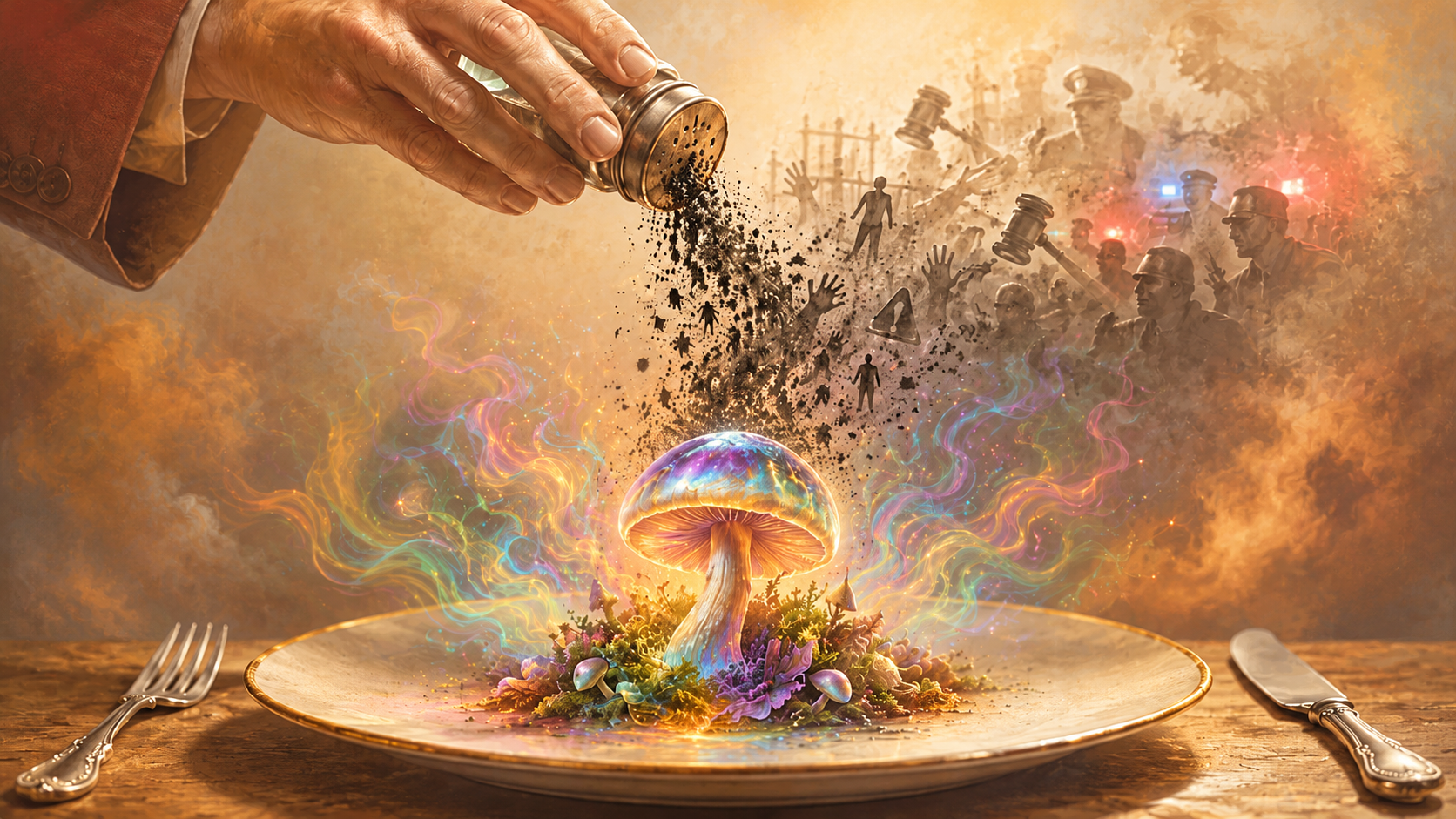
Fear and prohibition are not outside the psychedelic experience. They season it before it begins.
This framework separates the psychedelic experience into three distinct phases:
1. Pre-Experience — Fear Digestion and Societal Prohibition
The first phase begins before the substance is taken.
In this phase, the individual is not yet interacting with the pharmacological effect of the substance, but with the social, legal, moral, and psychological meanings surrounding it.
This phase includes:
- prohibition,
- legality,
- fear of being caught,
- inherited stigma,
- moral judgment,
- family narratives,
- social condemnation,
- authority structures,
- imagined consequences,
- and uncertainty around what the experience represents.
The central process of this phase is fear digestion.
The person confronts the fear produced by prohibition before any direct experience with the substance occurs. The fear may not come from the substance itself, but from the social world built around it.
A key transition happens when the substance is obtained and safely stored. At that point, part of the fear may dissolve because the imagined catastrophe does not occur. The individual realizes that the fear surrounding the act may have been disproportionate to the actual situation.
This does not mean there is no real risk. It means that some of the fear belongs to societal conditioning rather than direct experience.
For a stable and reflective mind, this phase may become a process of digesting social fear: the person separates actual risk from inherited fear, legal anxiety, moral panic, and imposed narratives.
For a less integrated or more fear-dominated mind, this digestion may not occur. The person may carry the fear into the experience itself, never resolving the first phase. In that case, the altered state may amplify unresolved fear rather than relieve it.
This phase is therefore not merely preparation. It is a confrontation with society’s rules, authority, and symbolic control over altered states.
2. During the Experience — Pharmacological and Emotional Immersion
The second phase begins when the substance takes effect.
This phase is defined by direct physiological and phenomenological alteration.
It may involve:
- intensified emotion,
- amplified sentiment,
- altered perception,
- associative expansion,
- sensory changes,
- reduced cognitive rigidity,
- loosening of ordinary self-control,
- interruption of recurring thoughts,
- and temporary displacement from ordinary mental loops.
For heavy thinkers, this phase may function like a vacation from overthinking.
The mind is not necessarily “solving” its conflicts rationally. Instead, the intensity of feeling, perception, and immersion overwhelms the habitual structures of analysis, vigilance, and recursive thought.
This may feel like:
- mental clearing,
- emotional release,
- relief from preoccupations,
- suspension of internal management,
- or temporary freedom from recurring fear.
However, this same loosening can be destabilizing if the person enters the experience with unresolved fear, poor grounding, panic, or lack of integration.
3. Post-Experience — Relief, Reinterpretation, and Integration
The third phase occurs after the pharmacological intensity fades.
The person returns to ordinary awareness, but with a changed relationship to the experience.
This phase may involve:
- relief,
- reinterpretation of fear,
- reassessment of authority narratives,
- reduced attachment to recurring conflicts,
- emotional decompression,
- renewed clarity,
- and integration of what was felt or observed.
The post-experience relief may come from several sources:
- the interruption of overthinking,
- the emotional exhaustion of the experience,
- the contrast with the previous mental burden,
- the realization that feared consequences did not occur,
- and the symbolic resolution of having crossed a prohibited boundary without collapse.
In this framework, the psychedelic experience is not one event but a sequence:
Phase One: digestion of societal fear before the experience.
Phase Two: emotional and pharmacological immersion during the experience.
Phase Three: relief, reinterpretation, and integration after the experience.
The simulator could model these phases separately:
- Phase One as the interaction between the individual and societal prohibition.
- Phase Two as the interaction between physiology, emotion, perception, and cognition.
- Phase Three as the integration layer where the individual updates their relationship to fear, authority, memory, and self-understanding.
The central insight is that psychedelics are not only biochemical events. They are also interactions with social meaning, fear structures, authority, identity, and the mind’s capacity to digest experience.
This note was developed with AI assistance from Mylan’s original concepts, conversations, and editorial direction.